
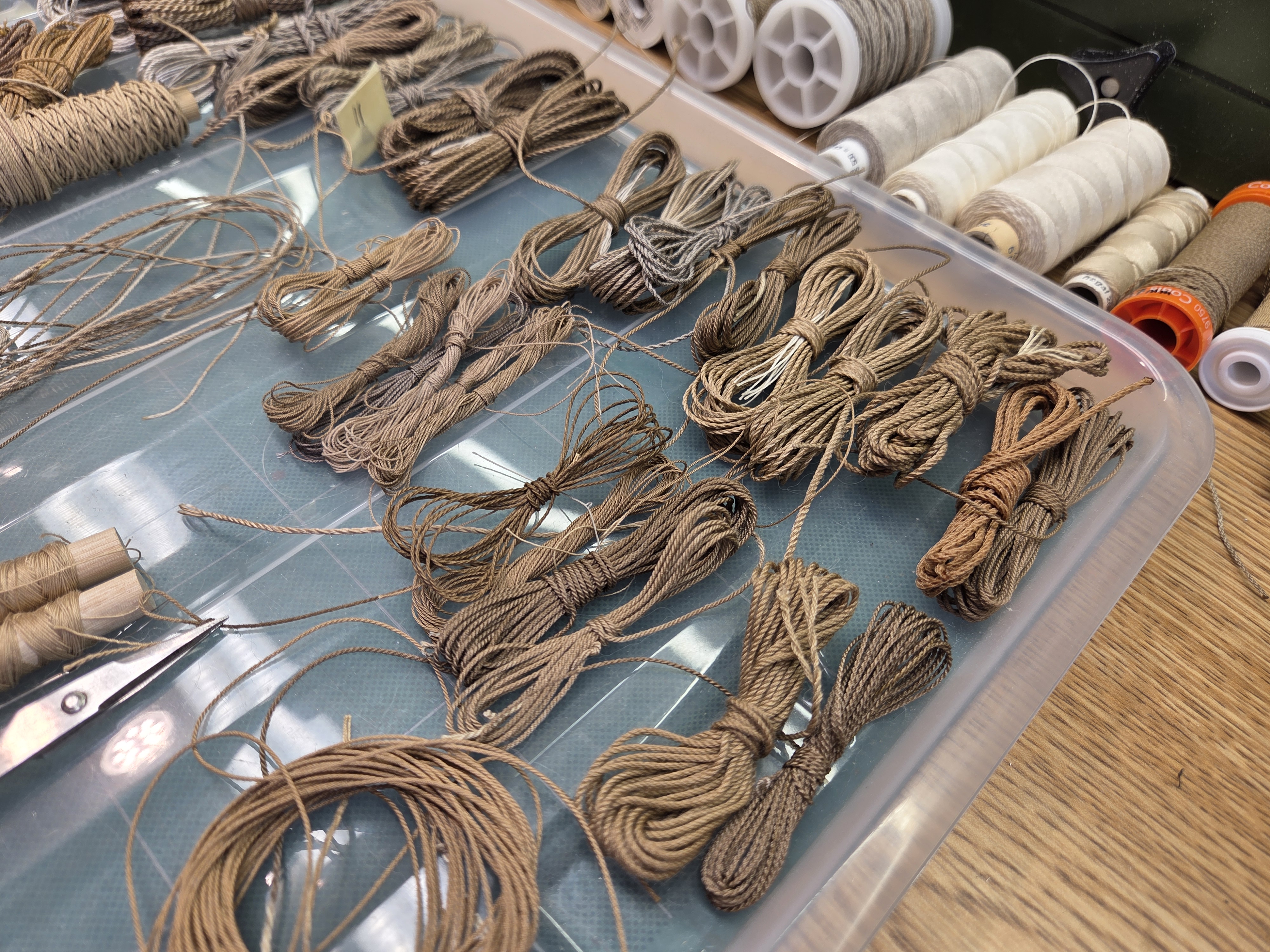
Thread goes in one end and rope comes out the other. That is the whole idea, and it stays satisfying however many times you do it.
This is a tray of made-up line waiting to go onto a model: eight or nine diameters, several shades, all laid from ordinary sewing thread on the same machine. Between them they will rig a whole ship.
Diameter is the whole point
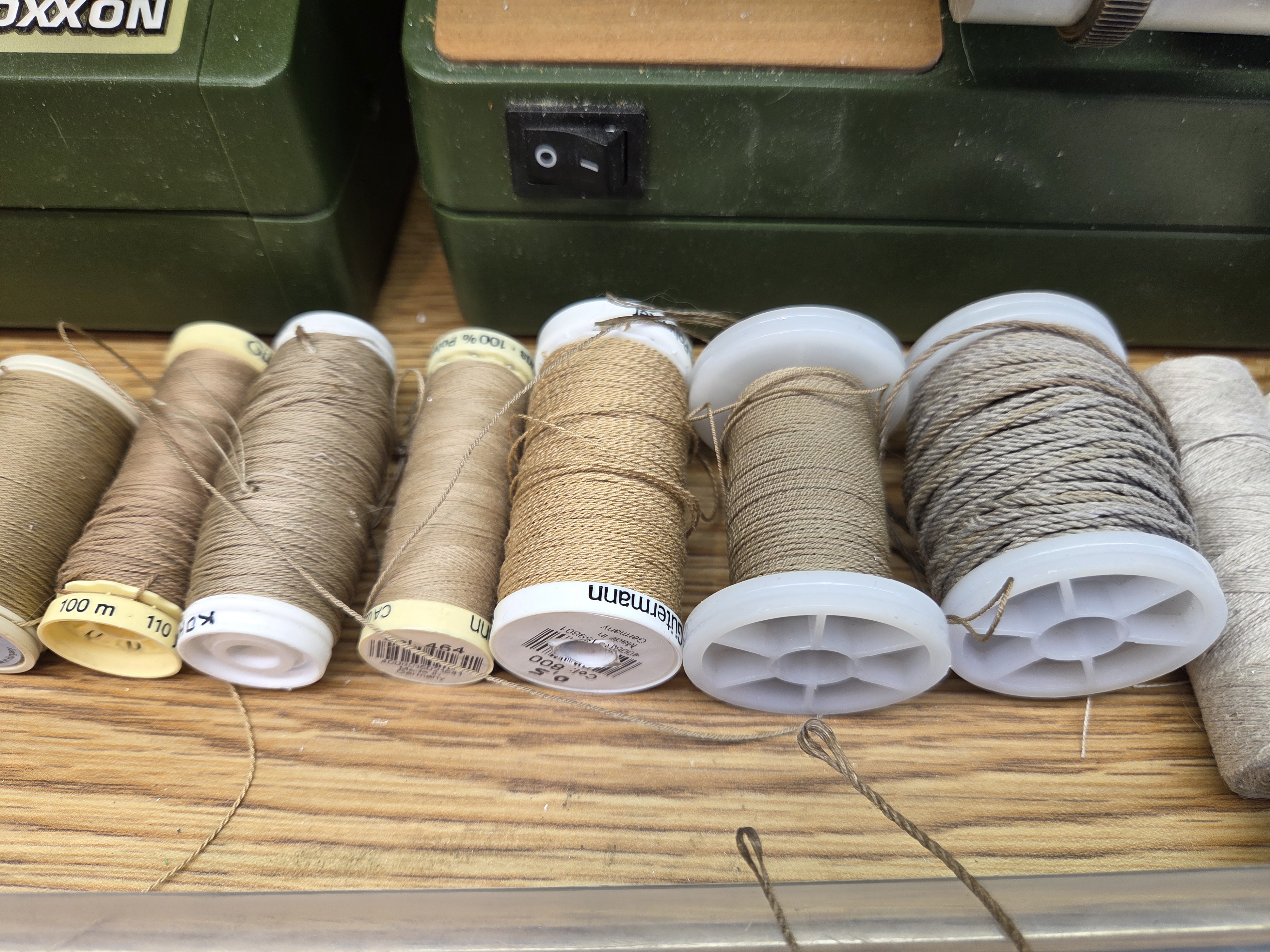
A rigged model needs its lines to differ from one another. Shrouds heavier than stays, stays heavier than halyards, ratlines finer than anything else. Get that hierarchy right and a model reads correctly even from across a room; get it wrong — one diameter everywhere — and no amount of hull finish rescues it.
That is the argument for laying your own rather than buying. Diameter is set by how many threads you feed and how hard you twist, so you can make the size the model needs rather than the size the shop had. Two strands of fine cotton and three strands of the same cotton are visibly different ropes, and both took a couple of minutes.
There is more on matching sizes to a particular ship in choosing rope thickness.
Colour, and getting it consistent
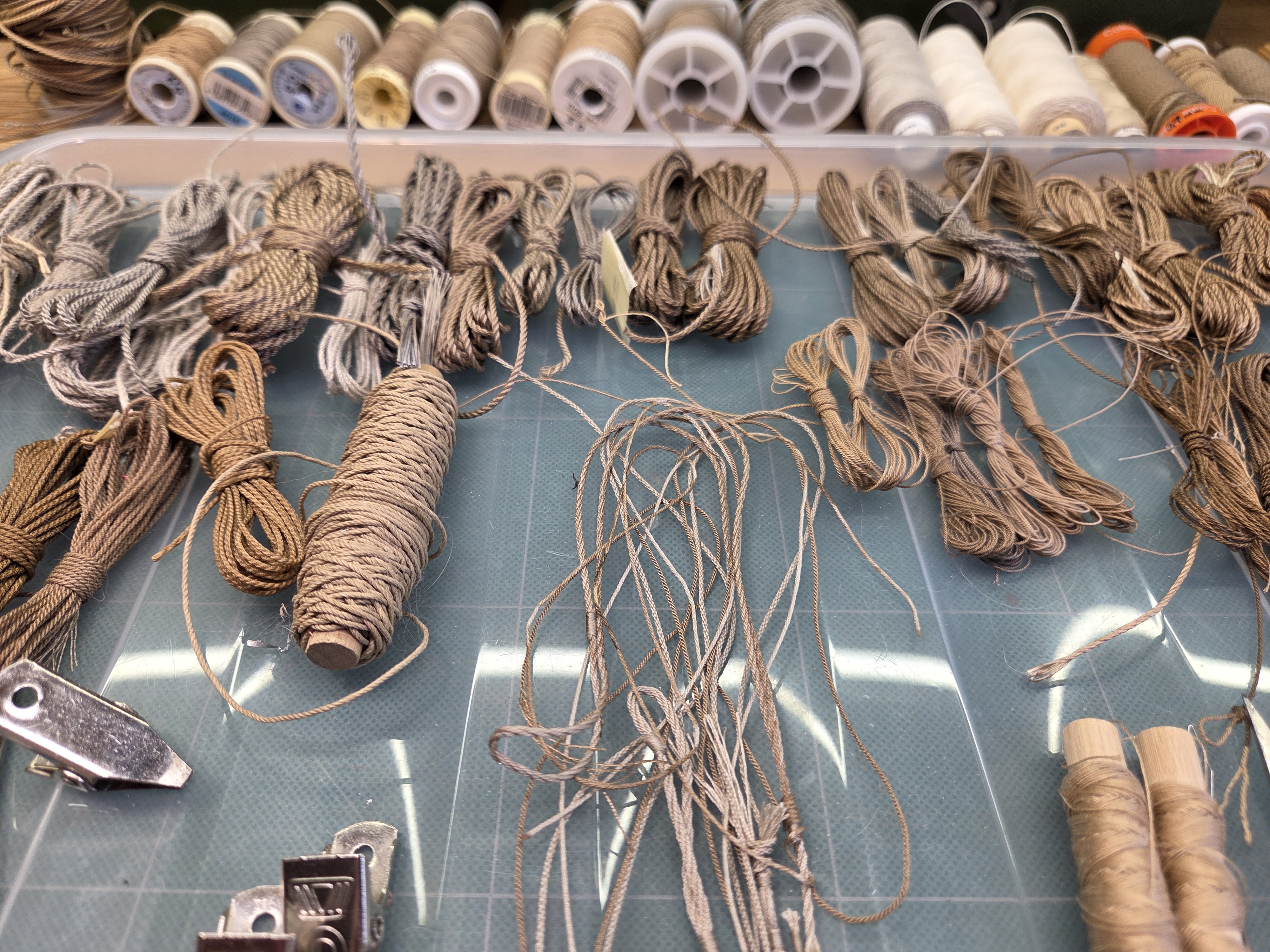
Standing rigging was tarred and reads almost black; running rigging was not and stays pale. The easy way to get both is to lay them from different thread rather than to paint or stain rope after the fact — dye on made-up rope stiffens it and fills the lay, which is exactly the texture you were making your own rope to get.
Whatever thread you settle on, buy enough of it in one go. Thread colour drifts between dye lots, and a shroud laid from a new reel halfway up a mast will not quite match its neighbours. Which thread to start from is covered in the note on thread for rigging.
Make it in batches, store it properly
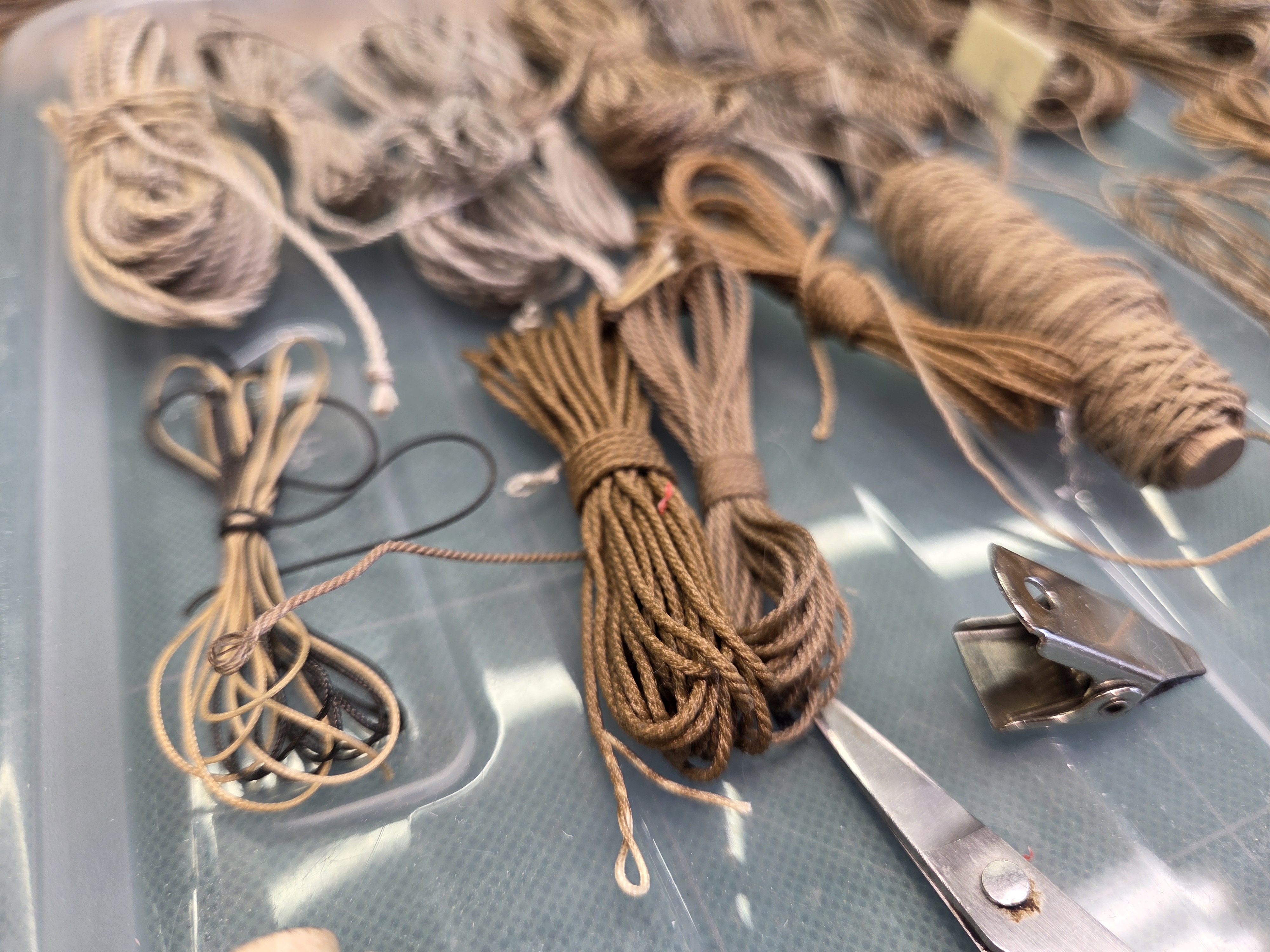
It is far quicker to lay six lengths of one size than to set the machine up six times over the course of a build. Make a batch, then keep it somewhere it will still be usable in three months.
- Hank it, do not coil it loose. A hank tied off in a figure of eight pays out from one end without tangling. A loose coil in a drawer becomes a bird's nest.
- Label as you go. Two adjacent diameters are indistinguishable by eye a week later, and guessing wrong means unpicking a mast.
- Keep it flat and out of the light. Cotton in particular fades, and a faded hank will not match the rest of the ship.
- Make more than you need. Rope is cheap in thread and expensive in setup time. Running out mid-mast is the one genuinely annoying failure.
None of this is difficult. It is just the difference between a tray you can work from and a box you have to sort through.
Lay your own
One machine, any diameter you need, from thread you already have.
View the RopeMaster 4000