Best Thread for Model Ship Rigging — Materials, Sizes, and What to Avoid
"Which thread should I use for rigging?" is the question every builder asks after the planking is done. The honest answer: almost any fine thread can become rigging — but the material changes how it behaves, how it takes paint, and how it looks once twisted into scale rope.
The short answer
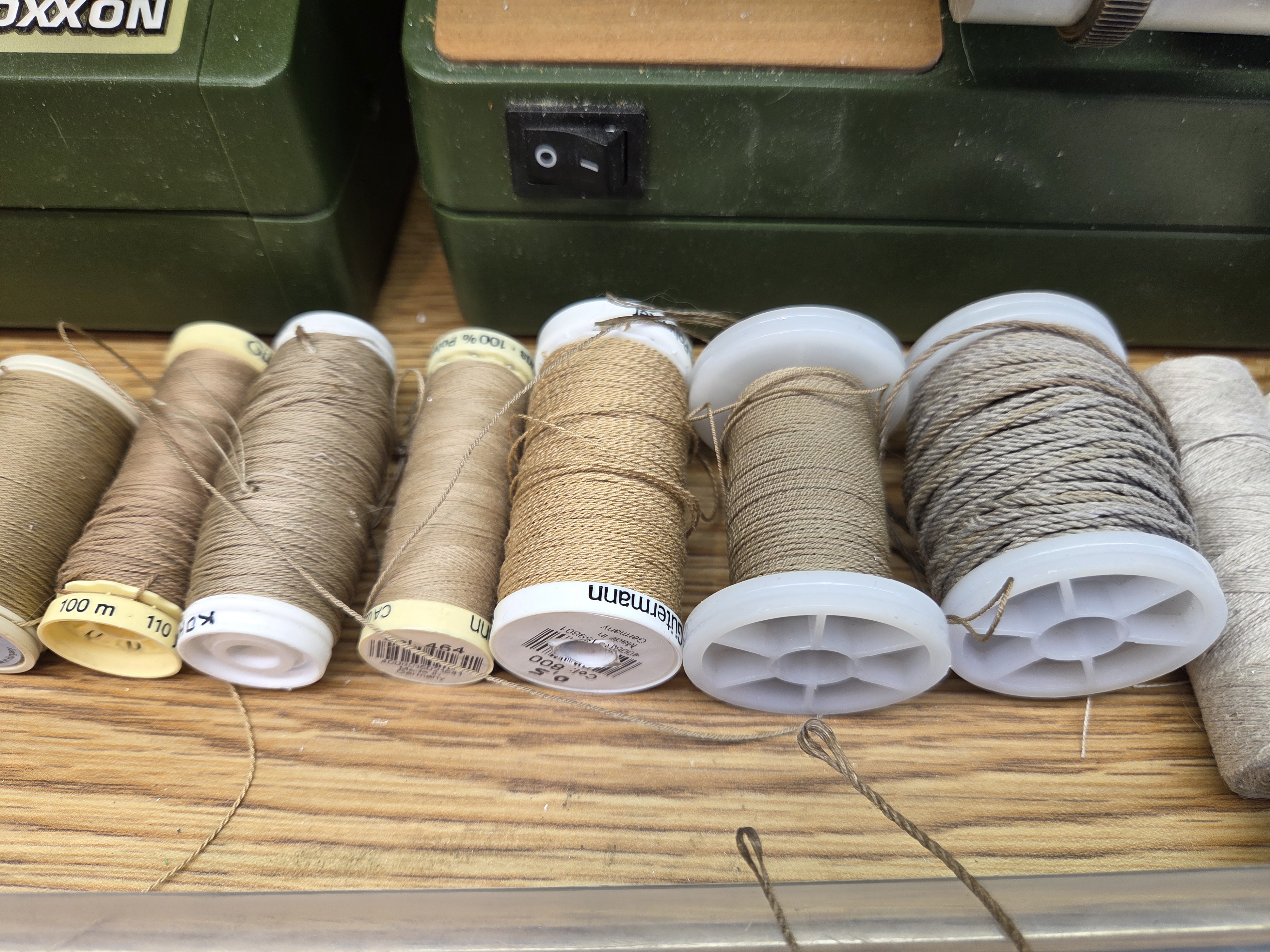
For most static models, a good polyester or cotton sewing thread twisted on a rope-making machine gives the best result for the money. Cotton takes stain and paint beautifully and reads as natural fibre; polyester is stronger, cheaper, and more uniform.
Cotton
- Look: matte, natural, takes diluted ink or acrylic stain evenly.
- Best for: period sailing ships where you want a "hemp" appearance.
- Watch out: weaker than synthetics; can fray if over-twisted.
- Good sizes: ordinary sewing cotton in 40s–60s weight for fine line.
Polyester / polycore
- Look: slightly shinier, very consistent diameter.
- Best for: repeatability and strength; takes flat black or buff paint well.
- Watch out: the sheen reads "modern" — dull it with a wash if you want age.
- Good sizes: 30–50 wt machine embroidery thread.
Silk (and silk substitutes)
- Look: fine, strong, lovely under magnification.
- Best for: museum-grade work and very fine rigging line.
- Watch out: price; genuine silk is dear.
What to avoid
- Button thread / upholstery thread: too thick and stiff for anything but the largest anchor cable, and it doesn't twist cleanly.
- Wool: frays and loses shape.
- Unspooled "rigging cord" that's already round: often too uniform and toy-like; twisting your own gives a more authentic helix.
Matching thread to the rope you want
The finished rope is thicker than the single strand you start with. As a rough guide, three strands of 50 wt polyester give a finished line around 0.4–0.5 mm — right for shrouds on 1:72 scale. Thinner thread drops you into ratline territory; thicker moves you up to stays and hawsers.
The advantage of making your own on the RopeMaster 4000 is that you're not limited to whatever cord a shop stocks. You buy plain thread by the spool and dial in the exact thickness your plan calls for, every time.
A practical starter kit
- One spool white cotton 50 wt (stain it later).
- One spool black polyester 40 wt (for standing rigging).
- The RopeMaster 4000 (or the DIY kit if you build your own tools).
- A card and pins to store cut lengths.
That's enough to rig a full ship and match every line to scale. See the machine and kits in the shop.