Model Ship Rigging for Beginners — Line, Cable, and Where to Start
Rigging is where a model ship comes alive — and where a lot of builds stall. This is the plain-English version: what the lines are called, which ones matter most, and how to make your own consistent cordage instead of fighting flat thread.
Standing rigging vs running rigging
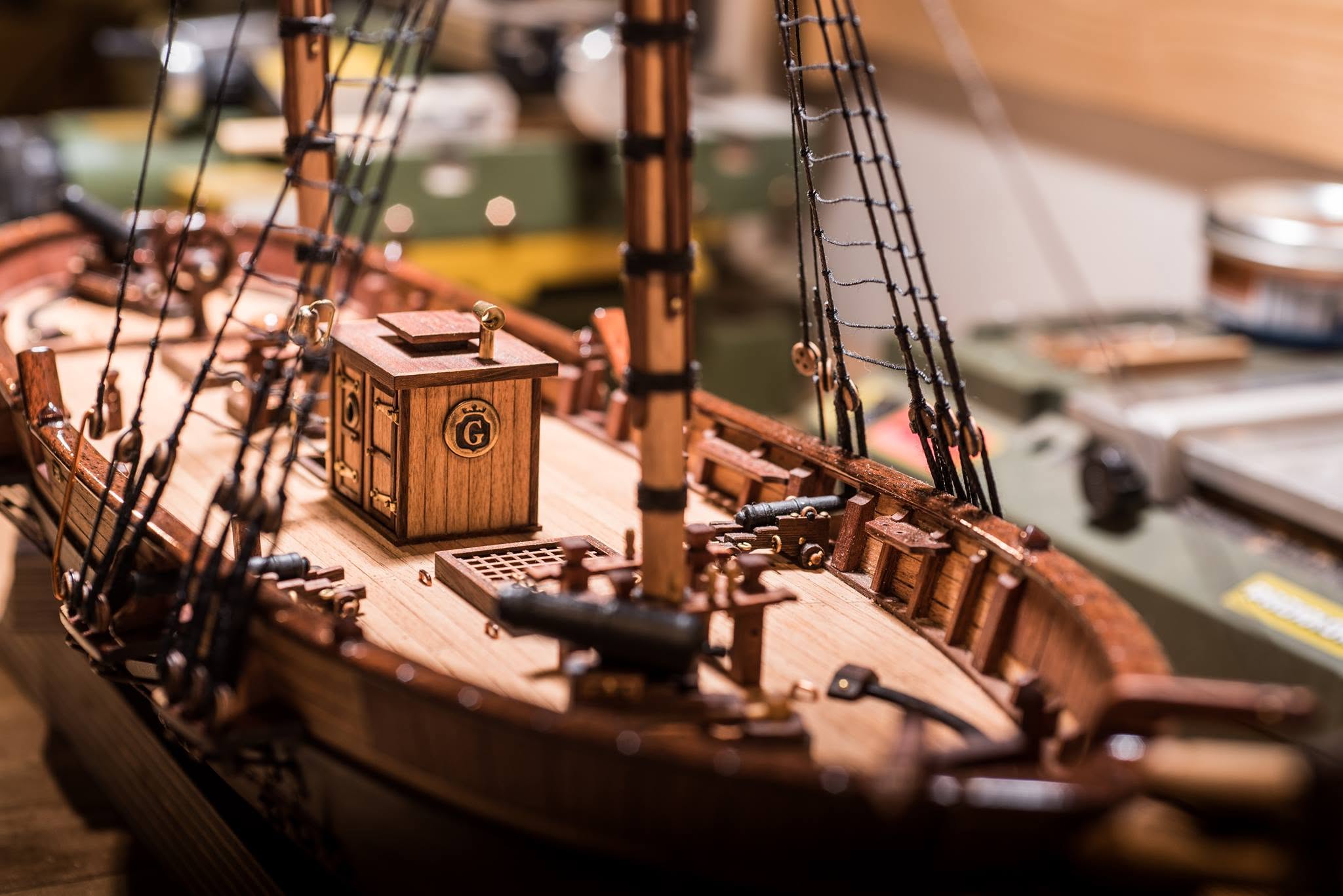
- Standing rigging holds the masts up: shrouds, stays, backstays. It's static and usually the thicker line.
- Running rigging moves things: lifts, braces, sheets, halyards, ratlines. Finer, and there's a lot of it.
You'll make far more standing rigging than running, and it's where consistent thickness shows most.
The names you'll hear
- Rigging line: the general term for the cordage. On a model it spans fine lifts to heavy shrouds.
- Anchor cable / hawser: the thick rope the anchor hangs from. The biggest single line on the ship — make it clearly heavier than everything else.
- Shrouds: the side supports of a mast. Multiple, parallel, evenly spaced.
- Stays: fore-and-aft supports. Typically a touch finer than shrouds.
- Ratlines: the little cross ropes on the shrouds you'd "climb." Very fine.
A sane order of work
- Plan the thicknesses from your drawing before you touch thread.
- Make the rope in batches by size.
- Fit standing rigging first (shrouds, stays), then running.
- Add ratlines last — they're fiddly and you don't want to disturb them.
Why make your own line
Bought "rigging cord" comes in fixed sizes and often looks too perfect — more toy than tall ship. Twisting your own on a rope-making machine gives you a real helix, a true round section, and any thickness your plan asks for, from ratline-fine to anchor-cable-thick, all from one tool. It's also cheaper: plain thread by the spool beats specialty cord by the metre.
Don't over-think the first ship
Pick one scale (1:72 is forgiving), make three line sizes (thick / medium / fine), and rig to the plan. Uniformity beats ambition — a ship with consistent line in three sensible sizes looks more "right" than one with twelve slightly different cords.
The RopeMaster 4000 covers that whole range from a single machine; the DIY kit is there if you'd rather build it yourself. See both in the shop.